Part 3 of our plain-English series for UK families. The full series is at news.atozofcyber.co.uk
At some point, something will go wrong.
That is not pessimism. It is the honest reality of raising children in a world where they spend significant portions of their lives online. Something uncomfortable, upsetting, or frightening will happen — a cruel message, an unsolicited image, a stranger saying something that feels wrong, a humiliating screenshot shared without permission.
When it does, how you respond in the first few minutes will shape whether your child ever comes to you again.
This article is about those first few minutes — and the conversations that follow.
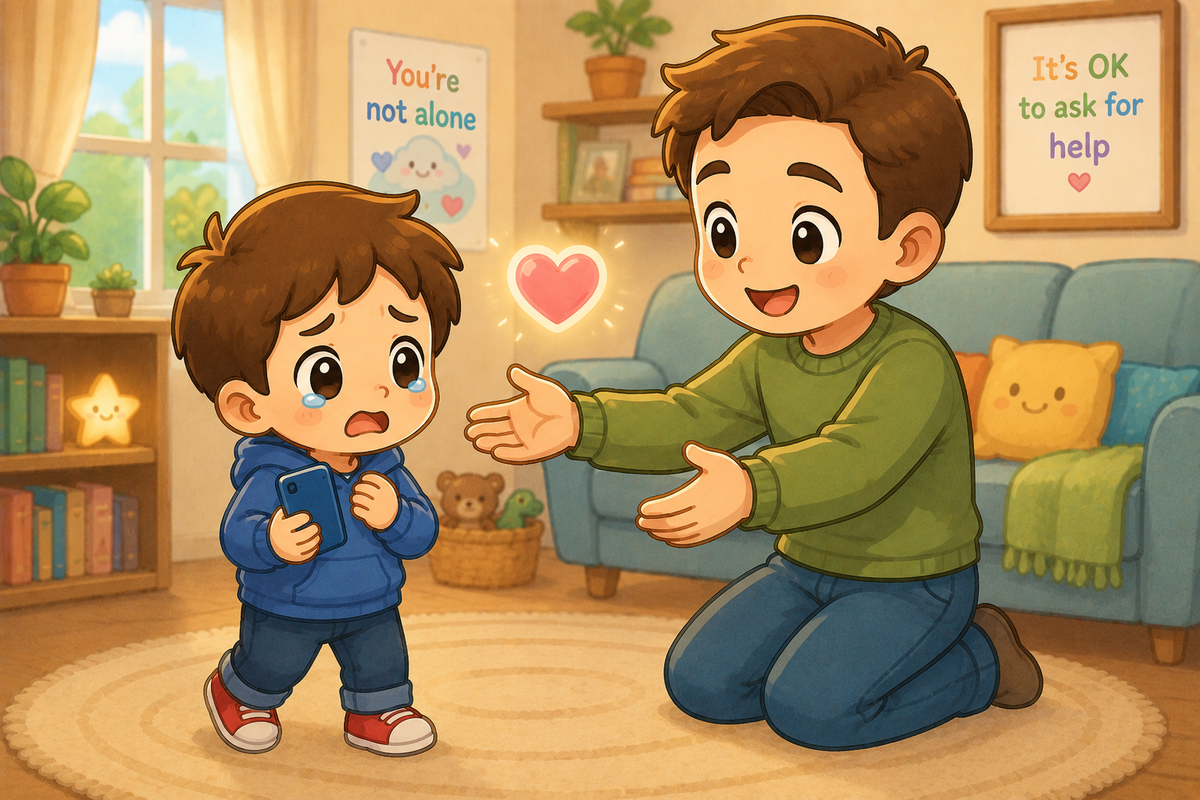
The thing that matters most: they came to you
If your child tells you that something has gone wrong online, the single most important thing to understand is that they came to you. In the context of how many children stay silent — the NSPCC found that many children who experienced cyberbullying said nothing to parents because they feared losing their device — the act of disclosure is significant.
Your first response will determine what happens next. Not just in this incident, but in every future incident too.
The responses that close the door: visible panic, immediate anger at the platform or the other child, taking the phone away, saying "I told you so," or immediately demanding to see every message. These responses are all understandable. They are all natural. And they all communicate, to your child, that coming to you made things worse.
The responses that keep the door open: staying calm, thanking them for telling you, asking gentle questions, and making clear from the start that they are not in trouble.
It sounds simple. In practice, when you are sitting next to your distressed child and looking at something on a screen that upsets or alarms you, it is very hard. Worth rehearsing in your head before the moment arrives.
The different types of "something went wrong"
Not every online incident is the same, and the response should be proportionate to what has happened.
Cyberbullying — repeated, targeted cruel behaviour from peers — is the most common. Ditch the Label found that 69% of young people under 20 have done something abusive to another person online, and 17% have experienced it directed at them. The response involves documenting the evidence, reporting to the platform, involving the school if the other child attends the same school, and keeping communication open with your child throughout.
Unsolicited contact from unknown adults is a different category entirely. If your child has been approached by an adult they do not know in a way that feels inappropriate — particularly if that adult has asked to move the conversation elsewhere, asked for images, or asked for personal information — this is a matter for CEOP (the Child Exploitation and Online Protection command), not just for the platform. You can make a report at ceop.police.uk without calling the police directly.
Accidental exposure to upsetting content — graphic violence, sexual content, content about self-harm — is extremely common and not always the result of anything your child did wrong. Algorithms serve content based on engagement, and a child who watches one slightly edgy video can find themselves served progressively more extreme content within hours. The response here is conversation — asking what they saw, how it made them feel, and what questions it has raised — without minimising or catastrophising.
Image-based incidents — nude or sexual images being shared without consent, sometimes called sexting when it involves peers — require particular care. Under UK law, sharing sexual images of anyone under 18 is illegal, regardless of who took the image or who shared it. Your child may have been the recipient, the subject, or in some cases the sender. In every case, the priority is your child's wellbeing, not blame. The UK Safer Internet Centre operates a helpline — 0344 381 4772 — specifically for these situations and can help get images removed from platforms.
What to do, step by step
Step 1: Don't take the device away immediately. The evidence is on it. Screenshots, message threads, usernames, timestamps — all of it may be needed if you report the incident. Take screenshots or photographs of the relevant content before doing anything else.
Step 2: Don't retaliate. If your child has been bullied or harassed, the instinct to respond on their behalf is powerful and understandable. Retaliating — even calmly — can complicate any formal report and can escalate the situation.
Step 3: Report to the platform. Every major platform has a reporting mechanism. Use it. It may feel futile, but reports do result in accounts being removed, and they create a record.
Step 4: Involve the school if the other child is a classmate. Schools in England and Wales have a legal duty under the Education and Inspections Act 2006 to address bullying that affects their pupils, including online bullying that takes place outside school hours. Most schools want to know. Most will act.
Step 5: Contact CEOP if an adult is involved. If your child has been contacted by an adult in a concerning way, CEOP is the right route. Their website — thinkuknow.co.uk — has clear guidance for parents and children on making a report.
Step 6: Keep the conversation going. The incident is not over when the immediate crisis is managed. Check in with your child in the days that follow. Ask how they are feeling. Make sure they know it was not their fault and that coming to you was the right thing to do.
When your child is the one who did something wrong
This happens too. Children say cruel things online. They share images they should not. They participate in pile-ons. They exclude others in group chats. If you discover that your child has been the one causing harm rather than experiencing it, the response requires a different kind of conversation — one focused on empathy rather than punishment.
What did they do? Why? Did they understand the impact on the other person? What would they do differently? These are more productive questions than immediate punishment, which tends to produce shame and concealment rather than understanding and change.
That said, if your child has shared sexual images of a peer, that is a legal matter that may need to involve the police regardless of your child's age or intention. Seek advice from the UK Safer Internet Centre helpline before deciding how to proceed.
What does this mean for me?
Rehearse your response before you need it. Decide now that your first words will be calm and that your child will not lose their device as an immediate consequence of coming to you.
Know the resources before you need them. CEOP, the UK Safer Internet Centre helpline, and Childline are all worth bookmarking now.
Document before you act. Screenshots before anything else.
Keep the conversation going after the immediate incident is resolved. The follow-up check-in is just as important as the first response.
🧠 The Human Factor
| Technology involved | Social media platforms, messaging apps, gaming environments, and the content moderation and reporting systems they operate |
| Root cause | Online incidents involving children are almost always human in origin — peer behaviour, adult targeting, or algorithmic amplification of harmful content — and the human response in the first few minutes shapes everything that follows |
| What was at risk | A child's immediate wellbeing, their willingness to disclose future incidents, and in serious cases their physical safety |
| Prevention | Open communication established before incidents occur; knowing the reporting routes; responding calmly to disclosure; keeping evidence before acting |
Useful resources
- CEOP and Thinkuknow — ceop.police.uk / thinkuknow.co.uk
- UK Safer Internet Centre helpline (image removal) — 0344 381 4772
- Childline — childline.org.uk or 0800 1111
- Report harmful content — reportharmfulcontent.com
- NSPCC helpline for parents — 0808 800 5000
Next in the series: The family digital agreement — a simple framework for screen time, privacy, and trust.